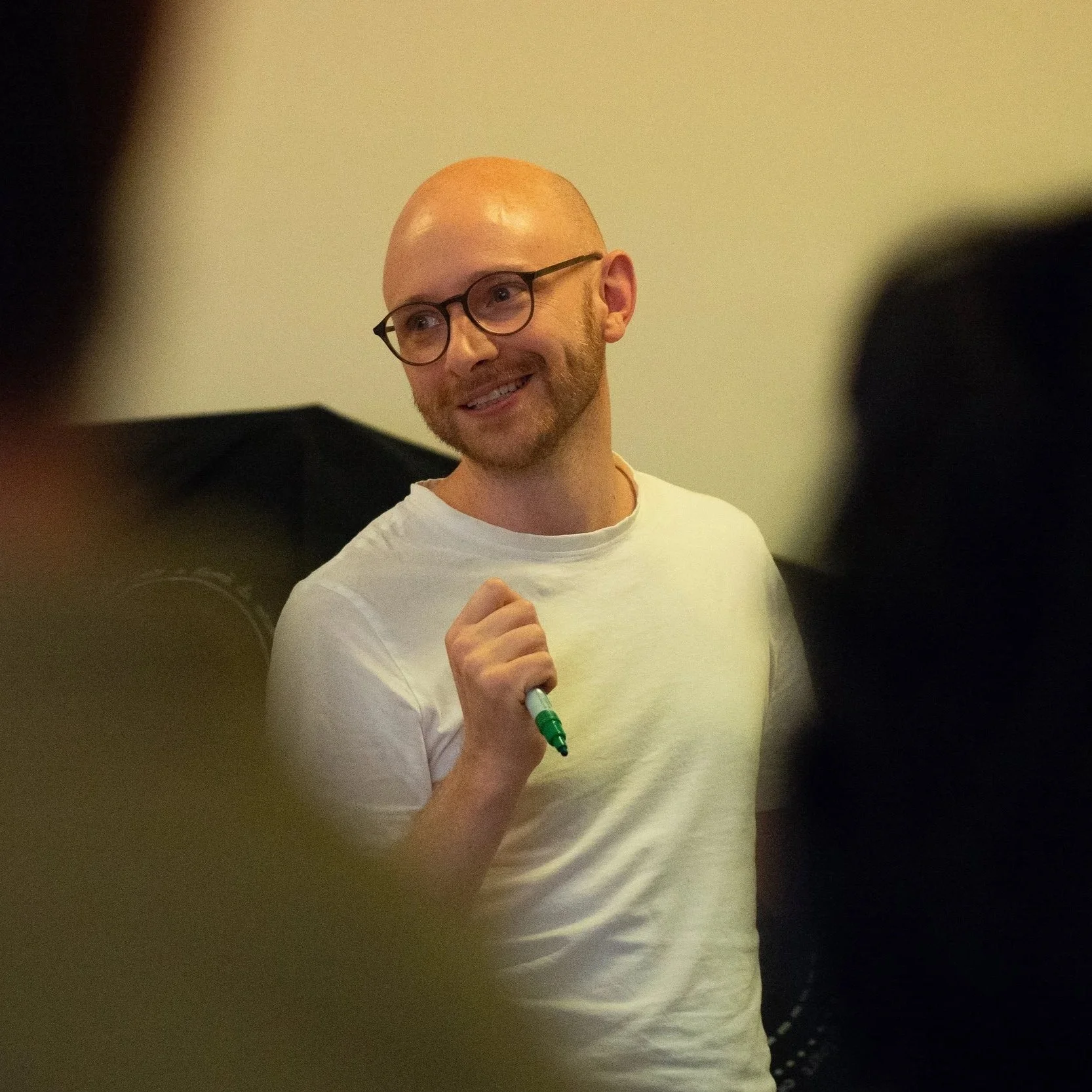
Developed by Nicholas J. Jones, artistic director of PRAKSIS, and Giovanna Esposito Yussif, artistic director of Museum of Impossible Forms, in collaboration with Tenthaus
Residency Dates: 1 June to 14 June 2026
Application Deadline: 23:59, 11 February 2026
Research agenda: In precarious times, what stratergies can small-scale arts and cultural organisations adopt to sustain themselves and support one another?
Work in small arts organisations is often cast in the language of reproduction: organisers’ projects are “brainchildren” that need to be “grown,” “nurtured” and “kept alive” via labour that demands sustained personal commitment. Presenting arts organisations as passion projects and arts workers as instinctive, unstoppable givers of social gifts, this kind of language obscures the punishing economic and labour conditions most small arts organisations face.
This residency offers an opportunity to unpack the situation and discuss sustainable solutions. It is proposed by PRAKSIS (Oslo), the Museum of Impossible Forms (Helsinki), and Tenthaus (Oslo): small independent arts organisations sustained by passion, solidarity and a commitment to cultural change. Like many of our peers we inhabit an increasingly unstable socio-economic environment and face insecure funding structures, rising costs, shrinking political support and increasing pressure to produce more with less.
Coincidentally, as they continue to steer their organisations through tricky currents, residency conveners Nicholas and Giovanna are both navigating new parenthood. Balancing these processes requires the creation and implementation of effective, inventive new strategies. So, this residency invites others facing similar challenges to go to work on the following research questions: how do we support our communities, collaborators and (very importantly) ourselves when resources are tight and expectations high? How do we adjust our operations so that they become sustainable without losing relevance, purpose and impact?
This residency invites fellow organisers, artists, curators, educators and activists who are similarly tackling the tensions of small-scale cultural work to share experiences, map obstacles, and imagine strategies for survival, continuity, and more workable conditions.
More information
Small and self-organised institutions play vital roles within cultural ecosystems. Their scale offers opportunities to connect with diverse publics and communities, act as testing grounds for new ideas, shed light on marginalised knowledge and experience, and facilitate experimentation in ways that larger organisations may struggle to do. Yet these same properties also make them especially vulnerable.
This residency asks:
What strategies can help small organisations and collectives sustain themselves — ethically, financially, and emotionally — amid political and economic uncertainty?
What strategies will enable us to continue practising care and extending solidarity to collaborators across differing geographies, disciplines and scales?
In circumstances in which political tendencies impose restrictions on cultural funding and public infrastructure, how may principles of fairness, justice and responsibility be maintained?
Can shifting the scale of operations, accepting a slower working pace or resisting ideologies of growth enable resilience, rather signal a retreat?
What types of alliance can support the survival and wellbeing of pressurised small and self-organising institutions?
We will explore these questions and more through open discussion, collective writing, shared meals and encounters with local practitioners and initiatives. The residency will combine opportunities for collective activity and self-led research and production, and share techniques for de-stressing and building resilience.
Structure and Activity
The residency will bring together eight participants from Norway, Finland, and internationally for a two-week intensive programme with PRAKSIS in Oslo.
Both Giovanna and Nicholas will have parenting responsibilities for young children. The programme will be designed around a clear weekday schedule and predictable shared working hours, with flexibility built in for participants with family or other caring responsibilities.
The group will meet on weekdays for shared conversations, workshops and informal interactions, balancing programmed activities with unstructured time for dialogue, research and . For example, possible elements include:
Collective writing, mapping, or reflection sessions
Resident-led activities and peer-learning
Informal visits to local initiatives and organisations
Group meals programmed at family-friendly times to accommodate parenting needs.
Exploring mutual support in theory and practice.
Public-facing activities, including PRAKSIS’s usual “Meet the Residents” presentation, usually held in the first week: a chance for participants to informally introduce themselves and their practices to the public and each other.
Developing recorded or documented conversations and other content towards the creation of an open resource.
While no fixed output is required during the two-week residency, there is a clear intention to develop outcomes over time. These may include public events, texts, publications, artworks, exhibition or programme proposals, podcasts or other formats agreed upon collectively by the group. These will serve as ways of developing, recording and sharing the residency’s proceedings and findings with wider cultural and organisational fields.
Participants will have generous scope to shape the residency’s direction and longer-term destinations collectively, in response to their shared interests, experiences and capacities.
About the Partners
PRAKSIS is a not-for-profit arts organisation fostering creative practice and knowledge production through collective activity and the exchange of ideas, skills and information. It seeks to establish dialogue between artists, thinkers and organisations locally and internationally, at all career stages, and across diverse cultures and disciplines. Its 10-year anniversary programme focuses on institutional sustainability — asking how cultural work can continue responsibly, equitably and with care.
www.praksisoslo.org
Museum of Impossible Forms (MIF) is a cultural centre in East Helsinki that brings together art and cultural workers committed to anticolonial, antipatriarchal and antifascist futures. Founded in 2016, MIF operates as a transdisciplinary, queer and intersectional feminist space for experimental, migrant and critical artistic practices, grounded in solidarity, dignity and collective cultural work.
www.impossibleforms.org/
Tenthaus is an art collective and artist-run space that has been active since 2009. It pursues open-ended, process-oriented participatory and collaborative projects, focusing on local contexts and promoting collectivity and inclusion through diverse forms of engagement. Initially an artists-in-schools project, it continues to maintain strong relations to its host community and is dedicated to cultivating and nurturing its environment.
The participation of Finnish residents in Together In Labour is supported by the Norsk-finsk kulturfond and the Finnish-Norwegian Cultural Institute (Finno).