

An anthology of art & ideas
—refreshed monthly
Eds. Rachel Withers and Nicholas J. Jones
Issue 1:
I give to you & you give to me
June 2021
Introduced by Rachel Withers
During the PRAKSIS team’s early planning meetings, a conversation arose as to whether the “Presents” in “PRAKSIS Presents” is acting as a verb (“PRAKSIS is pleased to present…) or a noun (“here, in this part of our website, are presents from PRAKSIS”). It’s doing both, of course. PRAKSIS Presents is an anthology of diverse, interesting and stimulating presents for the eye and mind, presented month by month during the organisation’s fifth birthday year and planned to continue beyond it: a way of sharing PRAKSIS’s ongoing activities, conversations, projects and exchanges, as well as highlighting items from its increasingly well-stocked archive, to as wide a public as possible.
To underline the double meaning, we have tied up this first instalment with a big bow, sparkly paper and a gift tag saying “I give to you and you give to me”. This is the opening line of True Love, a Bing Crosby and Grace Kelly duet from the 1956 musical High Society, and so PRAKSIS Presents’s very first gift to you is an earworm, and maybe a rather undesirable one at that. (For the recor, it’s said that the only way to get rid of one earworm is to trade it in for another. My recommendation would be Stevie Wonder’s “Yester-Me, Yester-You, Yesterday”, overheard, yes, yesterday at the supermarket. That will potentially stay with you for days.) Maudlin and hollow-sounding, True Love would be an ideal candidate for redeployment in a Scorsese-style film edit: extreme violence on screen, Bing and Grace simultaneously schmaltzing away over the Dolby stereo speaker system.
Sorry for the unpleasant image, but that’s the way present-giving goes. Gifts are complicated things whose very definition is up for grabs, and the nature and value of gifting systems are (and have long been) open to debate. The exchanging of gifts may constitute the most basic expression of the human social contract; it can be a way of saying “I recognise your humanity; let’s work together”. It can be a means to gain practical and symbolic leverage, as in the famous truism about the non-existent “free lunch”: to give a gift is to create an obligation and to receive one is to become indebted. Gift-giving can be a threat or sneak attack (as in the offer you can’t refuse, or those pesky ancient Greeks bearing gifts) but it can also be an act of wild, reckless extravagance, an acte gratuit and an end in itself. Gifting systems can be an assertion of a specific kind of cultural identity and status, or a gesture of resistance in the face of other economies (neoliberal capitalism, most obviously). The gift can also be a medium, a platform for creative expression. Within capitalism, artists are persistently implicitly or explicitly characterised as spontaneous, selfless, unstoppable givers of social gifts. The triangular relationship between gift economics, market economics and the practice of making art keeps recurring as both a problem and a field of possibility in theories and discussions of contemporary art and culture.
Within this issue, 2017 PRAKSIS resident Famous New Media Artist Jeremy Bailey introduces YOUar, an experiment in the creation, curating and marketing of Augmented Reality art that speaks directly to the complexities mapped out above. YOUar is an online gallery that shows and distributes AR sculptures – a fun way, as Bailey explains, to collect significant three-dimensional pieces without the housekeeping hassles presented by great big lumps of physical stuff. However, there are twists in Bailey’s business model. For example, all YOUar’s sculptures feature the artist as well as their work. In his own piece Brass and Wood Semicircles (2020), Bailey appears in his hallmark awful white polo and sawn-off jeans, cheerfully (and ridiculously) hefting the monumental work of the title, Atlas-style, into the air.
There is no need to beware these artists bearing sculptures, though, because YOUar’s go-getting marketing rhetoric is a little deceptive. In this gallery, 100% of each work’s selling price goes back to its creator, and most of the artists represented are female and/or of colour: in other words, not part of the big-bucks artworld’s continuing dominant demographic. So, for both Bailey and YOUar’s collectors, the trading of artwork evidently has a good deal to do with the assertion of a social contract that rejects standard capitalist economics and ensures that artists’ social gifts should not be acquired on the cheap. Bailey reports that many customers choose to pay more than the asking price for the works they collect. Arguably, among the key gifts being traded via YOUar’s at times laugh-out-loud virtual sculptures are the senses of resistance and solidarity, and a positive rejection of the capitalist “art of the deal”. For PRAKSIS Presents, Bailey has worked with Chicagoan artist and feminist Shawné Michaelain Holloway to produce a special edition of her work “emphasis on the Y (or the first time I gave my girlfriend head was in Indiana).obj” (2021), in what he describes as “a lesbian-forward colour palette of delicate lavender”. Within this issue’s pages you will find Shawné and her Robert-Indiana-inspired work, and can saucily twirl them both through a full three hundred and sixty degrees before you buy. We challenge you to resist investing!
In her trenchant and detailed essay Access to Tools, U.S. West Coast artist and musician Nina Sarnelle sets out some historical, economic and ideological contexts for understanding The Whole Sell, a barter-based e-store which she co-created following her involvement with the 2020 PRAKSIS residency Live or Buy. By browsing each work listed in The Whole Sell, viewers will discover the barter “price” its creator has set for it. Works can be swapped for uploads of specific photos or video footage, donation to chosen campaigns, or other tasks (“touching a Tesla”, the creepy task – or dare – set by artist Chester Vincent Toye, being one of the most peculiar).
Sarnelle locates the inspiration for the project in Stewart Brand’s Whole Earth Catalog (1968-71), and specifically in its ideological problems. Her essay indicts the Catalog’s galloping individualism and white, male ethnocentrism and traces the evolution of these tendencies into high-tech neoliberalism. “The WEC,” she writes, “peddled a quasi-libertarian ethos based on a naive blend of DIY meritocracy and tech optimism: the same ethos that inspired the founding fathers of Silicon Valley.” The ideological “tools” of Brand’s Catalog, she points out, have in the long term brought us globally distributed “surveillance, mass data collection and algorithmic oppression”; commodification and gamified lives, heightened alienation and a deep social polarisation fostered by digital and social media. Sarnelle goes on to discuss the significance of The Whole Sell’s substitution of a visualisation of a black hole for the “Blue Marble” view of the earth featured on Brand’s Catalog cover. An anti-triumphalist, “terrifying image” pointing up the fragility of human existence in a basically indifferent universe, the “donut” of the black hole is designed to counter the narcissistic geocentrism of the earlier publication’s imagery.
The Whole Sell, Sarnelle explains, attempts to think through the complexities of critical cultural production in conditions where art production seems deeply implicated in capitalist patterns of exploitative labour, and where there is clearly no “outside” from which to launch a critique. Drawing on the ideas of (amongst others) Andrea Fraser and Audre Lord, she frames The Whole Sell as a way of posing immanent critical questions (“What is cultural capital? How and why do artists sell ideas? What’s the difference between interaction and transaction?”) and proposing “modest”, “tentative” and “ephemeral” alternatives to business as usual. “Each piece [on the site],” she suggests, “becomes a small gift to be “repaid” in reciprocal acts, initiating a reflection on what we each value in art, culture and relationships… The Whole Sell has been engineered as a kind of tool, providing an alternative framework for art distribution, valuation, exchange and interaction.”
The interrelation of gifting, gift economics and art making forms one important facet of this issue’s theme. Equally important are the practices of creative hybridisation, cross-fertilisation and “infection”, in positive (and also maybe not so positive) senses. Since the start of 2020, responsible people around the world have been striving not to give to each other: muffling our faces, washing our hands, coughing into our elbows and avoiding one another entirely in an effort not to pass on a potentially deadly disease. The soundtrack for this would be “I’ll try my best not to give to you, and thank you for not giving to me”. Nevertheless, at PRAKSIS as elsewhere in the art world, the drive to give and receive imaginative gifts, to infect others’ imaginations, to feed one’s own work and ideas through a collective process, would simply not be stopped, and throughout 2020 up to the present it has continued and flourished online.
The residents of Climata: Capturing Change at a Time of Ecological Crisis, scheduled to run in Oslo in the spring and autumn of 2020, were particularly hard-hit and particularly resilient in their response. Meeting digitally to pursue questions of sound and ecological change, the group recorded and shared the aural environments in which they were immersed during the unexpected condition of a pandemic lockdown. One upshot of the residents’ interactions is Climata: a hub for sound and ecology, launching imminently and to appear soon in this issue. The project is intended as a global repository for field recordings that reflect and investigate changes in the world’s aural environment: reflections of a time of crisis, but also potentially motivations for change and inspirations for practical kinds of remedial action. While unwanted sound constitutes noise, wanted sounds might be thought of in a Cagean sense as sharing the condition of music, and the possibilities that digital technology offers to share the ephemeral phenomenon of sound across time and continents seems deeply poetically – and also politically – resonant. The hub’s content will be freely available online and contributions responding to its various sub-sections are actively sought; please consider getting involved.
The politics and poetics of collaboration were also of crucial concern to the participants of PRAKSIS Residency 7, For a Rainy Day: Publishing as a Site of Collectivisation in autumn of 2017. Slowly evolving section by section following this residency was the print publication Don’t Rest, Narrate, produced by Oslo’s Torpedo Press and designers Eller med a and launched via an online event in Spring 2021. Partly a collectively designed artists’ book and partly a reader, Don’t Rest, Narrate contains sections looking at radical publishing and the art of the book, the politics of collaboration, copyright and copyleft, and more besides. One of this project’s priorities was to try, through the strategic, collectively-conceived combinations of image and text that punctuate the book, to embody the affects of a shared creative process, with its tensions, misunderstandings and miscommunications, surprises, hilarity and joyful epiphanies. This issue of PRAKSIS Presents includes links to a video generated collectively by the residency group, plus the recording of the book’s launch discussion. Copies of the book are available and purchasable via PRAKSIS’s website.
This issue also features a conversation between Nicole Rafiki, creator of the Norwegian cultural project RAI (Rafiki Arts Initiatives), and PRAKSIS director Nicholas John Jones. RAI was founded to provide a platform and meeting space for Black Norwegian creatives, and it is presently at work developing art-therapeutic community projects for the Oslo area and working with OCA (Office for Contemporary Art Norway) to showcase work by artists whose approach is, in Rafiki’s words, “transnational and complex”. RAI’s agendas are inflected by ideas of fluidity and liminality — identity and culture understood as multi-centred, mutable and heterogenous. In her interview, Rafiki reflects on her early experience growing up in a largely white Norwegian monoculture: a key influence in her project to create environments “where race is not a defining factor.” Jones and Rafiki will be in frequent dialogue as she expands and develops RAI’s projects and networks - a trading of ideas that will undoubtedly be of great mutual benefit to both organizations.
Last but not least in this issue’s collection is A Tapeworm without a gut (sketches for disaster protofiction), a digital project combining still and moving image and text by artist and writer Gary Zhexi Zhang, a participant in PRAKSIS’s first (spring 2016) residency, New Technology and the Post-Human. Zhang’s Tapeworm takes this issue’s theme of exchange in a different, maybe disquieting direction. His interest is in the fascinating dynamics of parasitism, a situation where an invading organism helps itself, unbidden, to the hospitality of a host body but in the process (needing to keep its host alive) effectively and paradoxically becomes a kind of host itself. One of Zhang’s inspirations was the parasite louse Cymothoa exigua, which, he writes, “takes the place of the tongue of a fish — squats firm on the tongue of the host — shuffles in between the cheeks, and makes itself at home... The bug sucks, supplants, and inhabits, introducing itself to the mouth in place of the native tongue which it has secretly drained of blood. The fish is left largely unharmed, somewhat augmented. The louse is a homemaker; the uninvited guest becomes the unexpected host.” Parasitism is undeniably a kind of giving and receiving – but a very, very posthuman kind, devoid of any hint of the operation of a social contract. “The parasitical invitation refuses exchange value, rejecting the commensuration of a transactional ethics,” Zhang observes. In the course of this introduction I have travelled from earworms to tapeworms, and maybe I’ve now gone far enough; sorry, again, for starting this text with one unsavoury image and ending with another. I’ll get my coat, as the saying goes, and leave you to explore PRAKSIS Presents’s first issue at your leisure. We hope you enjoy our present!

YOUar
Jeremy Bailey and SHAWNÉ MICHAELAIN HOLLOWAY

Access to tools
Nina Sarnelle

Don’t rest, narrate
On art, publishing & collaboration
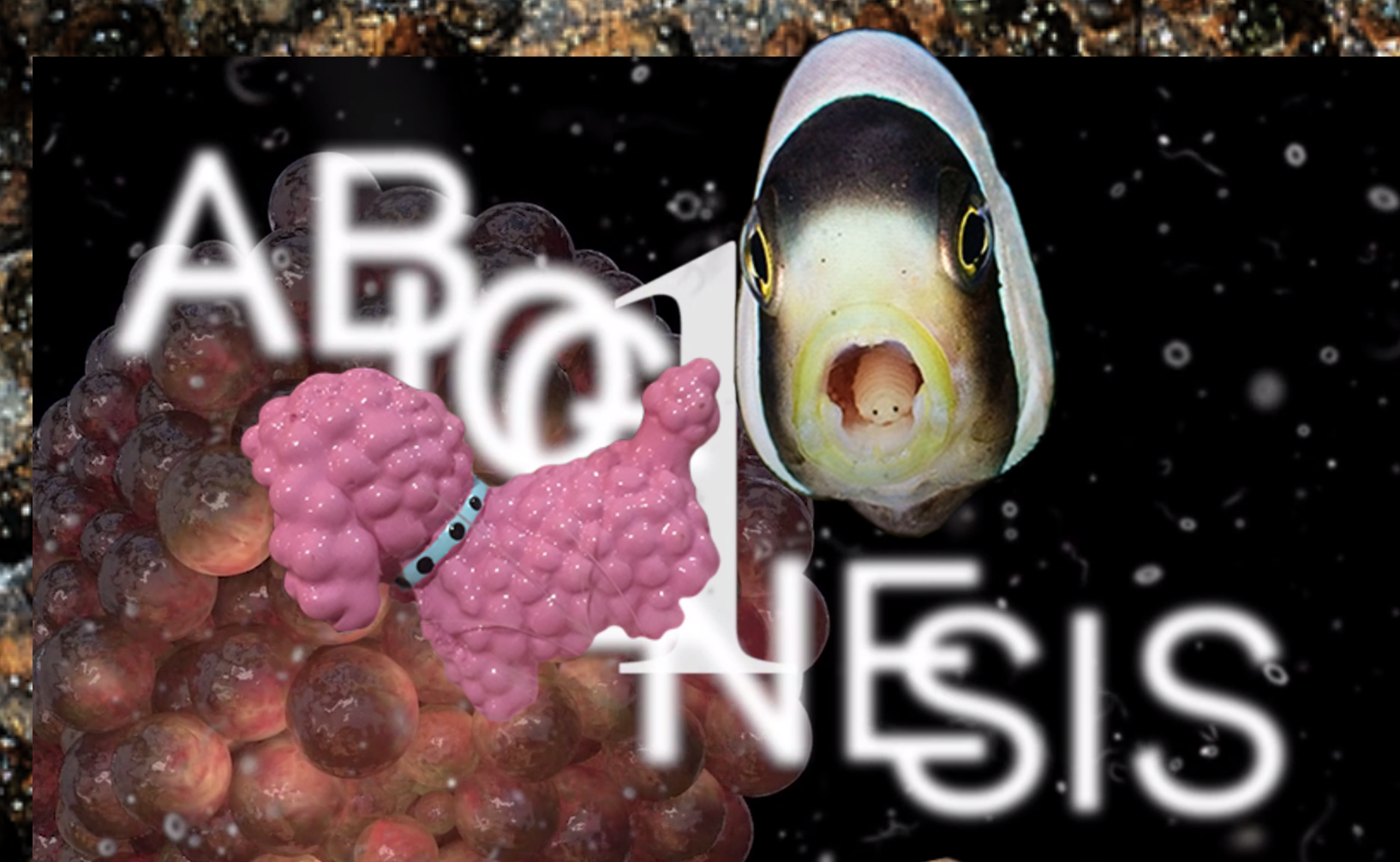
A tapeworm without a gut (sketches for disaster proto-fiction)
Gary Zhexi Zhang
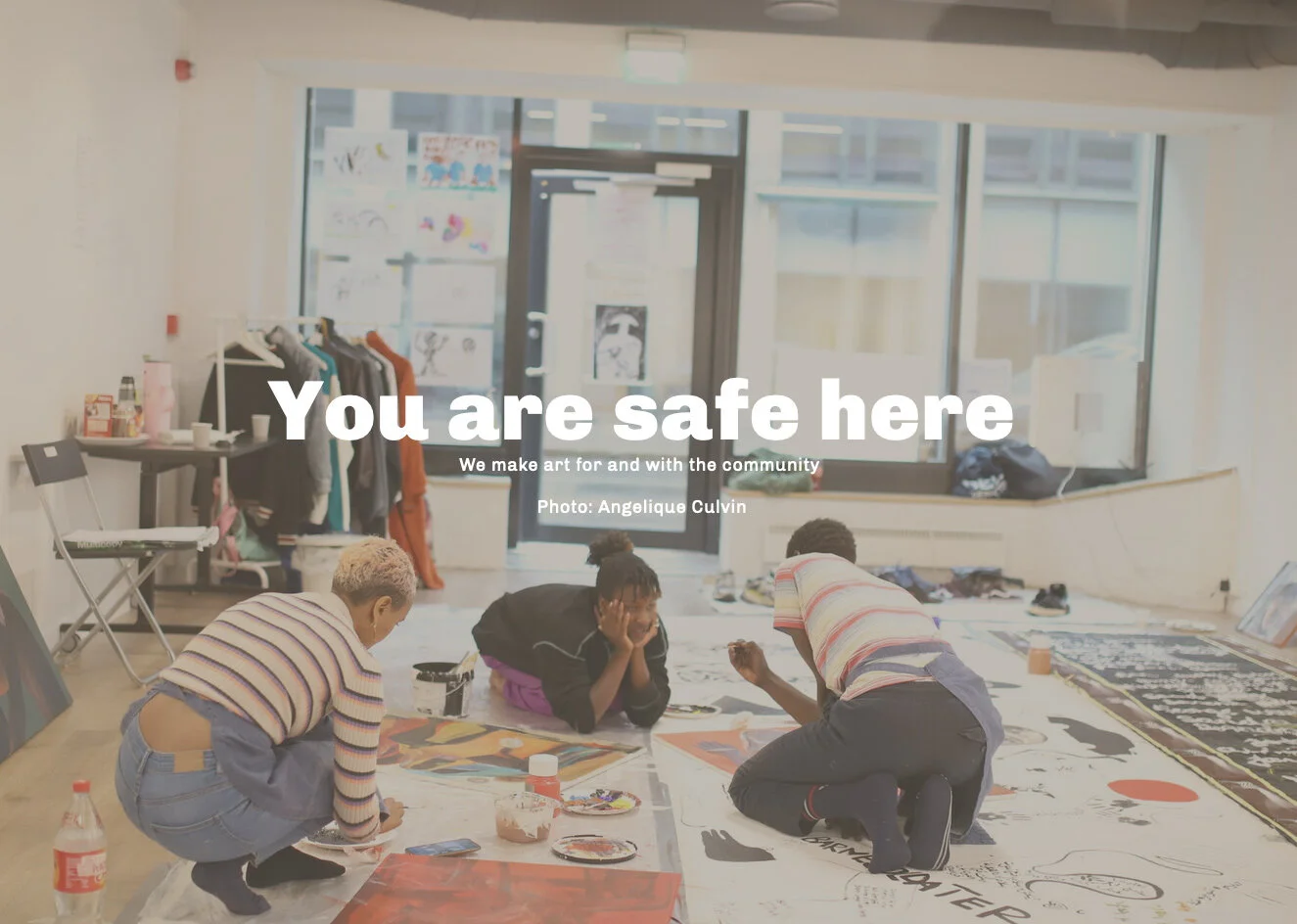
You are safe here
Nicole Rafiki and Nicholas J. Jones discuss motivations and approaches for creating community
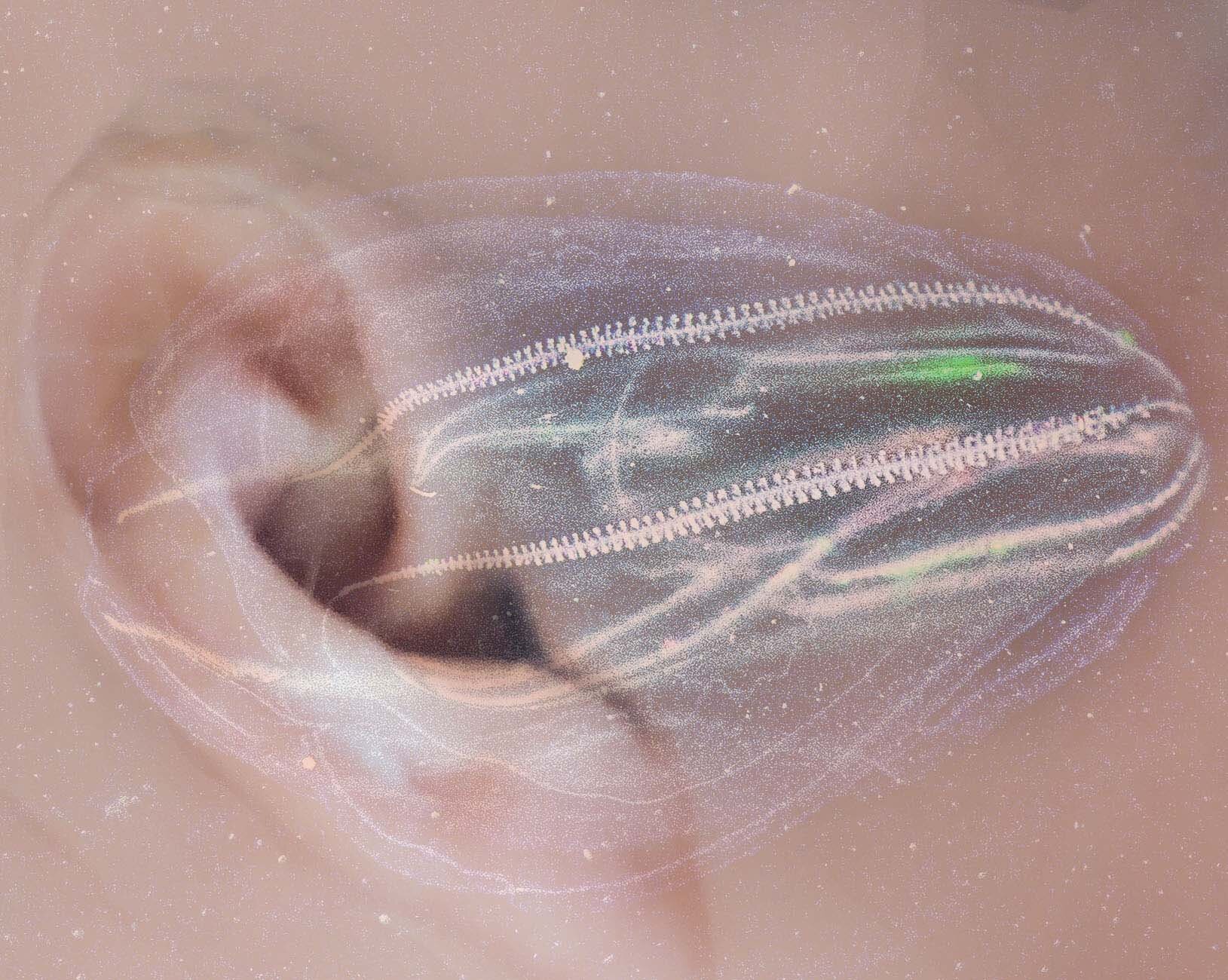
Climata - A hub for sound and ecology
Experiments and resources (image - Elly S. Vadseth)

