

Trust Is the Real Currency
Zambia-based gemstone cutter Rudolf Kangwa and Norwegian gemologist Remy Bugge discuss gemstone sourcing and the need for industry transparency throughout the supply chain.
Rudolf Kangwa is a Zambian lapidary based in the capital city of Zambia, Lusaka. He has been working as a professional gemstone cutter for more than 15 years.
Remy Bugge is the managing director of Bugge og Authen Jewellery Workshop. He is a trained goldsmith, gemmologist and jeweller.
Rudolf Kangwa: In this industry, I often encounter suspicion when I try to sell gemstones sourced from mines worked by locally-based small companies and communities. Why is this? Shouldn’t a stone’s integrity be strongest when the supply chain is short and transparent? Would you buy locally sourced gems?
Remy Bugge: In principle, yes, but in practice, it’s complicated. The full range of stones that I use comes from all over the world, so few, or no, local suppliers would offer it. To maintain a broad stock, I would need to establish relationships with multiple sources: emeralds from Colombia, quartz from Brazil, rubies from Mozambique. For most independent jewellers that’s far too complex and time-consuming. Large gemstone dealerships could do this, but they don’t; it’s easier for them to send buyers to trade fairs, where they usually buy from middlemen and rarely deal with the actual source. Plus, the process is further complicated but questions of trust—not only to do with authenticity, which is non-negotiable, but also reliability: being able to obtain the right stone, on time, every time. Dealing with larger intermediaries who source from multiple mines takes away a lot of the logistical headaches.
RK: So one of your biggest challenges is consistency. Who delivers that for you?
RB: The Germans — always reliable, always expensive.
RK: But going through a middleman raises costs.
RB: That’s true, but it is usually worth it. My diamond broker in Tel Aviv is a perfect example. We’ve worked together for years and he knows exactly what I want. Sure, I could find cheaper stones, but I won’t switch simply to make a ten to twenty percent saving. Consistency is worth more than a bargain. Sourcing excellent coloured stones is also complicated by cutting issues. Poor cutting creates big “windows” in the middle of the gem. This kills the brilliance: the light just falls through, and it’s a common problem, because most cutters work to retain weight rather than enhance a stone’s beauty. I made a trip to the Vicenza Fair, the biggest in Europe, specifically to find a source of well-cut stones, and out of hundreds of exhibitors I found only one: Arnoldi, a German company. Their work was expensive but precise and brilliant. That tells you there’s a gap in the market when it comes to high quality gemstone cutting.
RK: What other challenges are you facing?
RB: Prices are climbing fast and customers don’t understand why, so I have to explain it every time. By the time a stone reaches me, it’s often changed hands so many times that the price has tripled or quadrupled. An emerald’s per-carat value of $500 at source might have jumped to $3,000 by the time it’s in my shop.
RK: If you could cut that price by, say, 30%, would you change suppliers?
RB: Yes, but only if I could trust and rely on the source: that’s the real currency. I need visible stock, simple ordering and reliable shipping. FedEx or DHL is worth the cost if it means the stone arrives on time and exactly as described. If the delivery is consistent, a relationship can grow.
RK: Does the origin of gems matter to your clients?
RB: Usually not. Sometimes it’s a novelty — “this came from Nigeria” — but it rarely decides a sale. The exception is certain high-value stones: Colombian emeralds, Burmese rubies, but unless I have a certificate from a top laboratory such as GRS or Gübelin, I won’t make a claim about a stone’s place of origin. Without the certificate, there are too many uncertainties.
RK: Would sourcing stones directly from their place of origin benefit your business?
RB: Yes, especially for my workshop, where we do a lot of custom work with unusual stones. Direct sourcing would fit that process perfectly, but it has to be easy.
RK: And how important is workmanship?
RB: It’s everything, even in the case of relatively inexpensive stones. No matter the price tag, a poorly cut amethyst will look cheap. I’d rather pay triple the price for a well-cut stone, because it will sell faster and for more. The irony is that for quartz stones such as amethyst or citrine, well-cut options are almost impossible to find unless they are done to order. At the Vicenza fair I couldn’t find a single good quartz stone, except at Arnoldi’s booth.
RK: How is African cutting perceived?
RB: The honest answer is that it’s grouped with much of the Indian trade and generally not perceived as great, although there are some high-quality exceptions. Changing that perception is a challenge: the presence of one good cutter won’t shift the market. That will take years and lots of consistent, quality cutting.
RK: I’ve seen African-cut stones sell for thousands, but the moment the cutter’s identity is acknowledged, the price can drop.
RB: That’s down to prejudice, and when the work is good it’s completely unjustified. Showing the process—for example via a strong, transparent website that includes videos of the cutting and presents the people involved—could begin to change that perception.
RK: Could mining communities and companies like yours work together for mutual benefit?
RB: Yes. Even something as simple as acknowledging the source on my site — “this stone came from X company in Africa” — would help build awareness. But the organisation’s corporate ethos and presentation would need to be strong enough for me to recommend it with confidence, and access to information about its stock would have to be protected by a retailer login. For obvious reasons, retailers won’t want to promote a business that also sells directly to their customers.
RK: Has the industry been honest about gemstones’ origins?
RB: No. Absolutely not. Without documentation, you can’t trust the claims that are made. And there’s too much romanticising — the lone miner with a pickaxe, the stone found on an idyllic mountain trip.
RK: How different is the romantic narrative from the reality?
RB: As an example, take aquamarine from Afghanistan. The romantic story leaves out the dangers involved in sourcing stones: people walking through Taliban territory, being shot at, smuggling the stones out. In Madagascar, you might need armed guards or even a helicopter to reach the mine. None of that is glamorous.
The realities of large-scale mining are equally disturbing: bulldozers tearing up land, stripping forests. That’s why we rarely see the full story of gemstone sourcing; it’s not attractive to consumers.
RK: What change would you most like to see in the gem industry?
RB: Transparency is key. It should be easy to see where stones come from, how they’re mined and who is involved. The industry has avoided telling the truths of production for decades and customers haven’t asked enough questions. Greater openness would especially help the communities that source stones locally on a small scale: the kind of work that’s actually beautiful and responsible.
RK: That’s a long road.
RB: Yes; it won’t happen overnight. But anyone can start by telling the truth, showing the real process, and delivering exactly what they promise. That’s how trust begins.
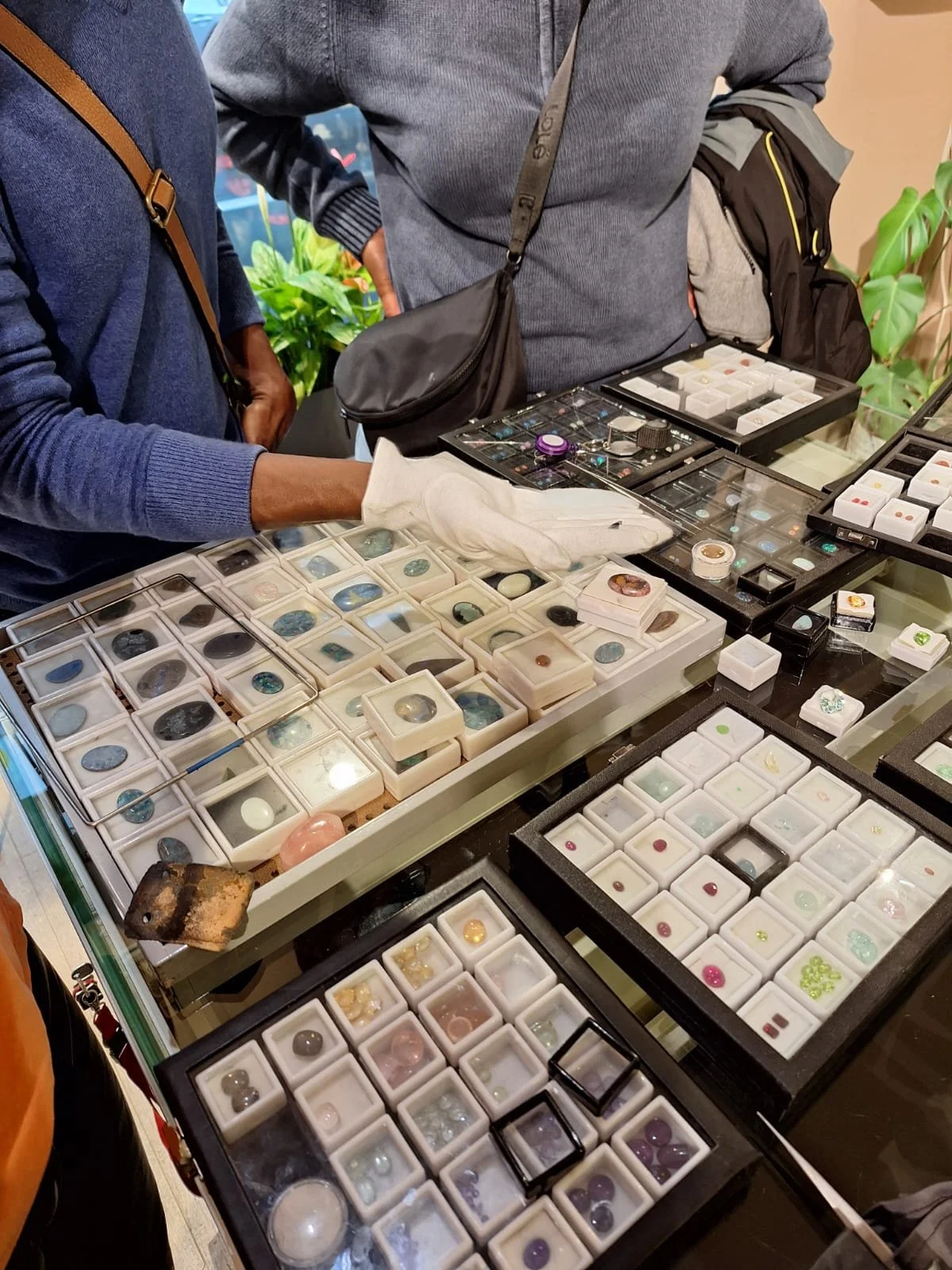
Rudolf Kangwa visits Bugge og Authen in Oslo during Residency 28: Your Pleasure, Our Pain – The Ethics of Luxury
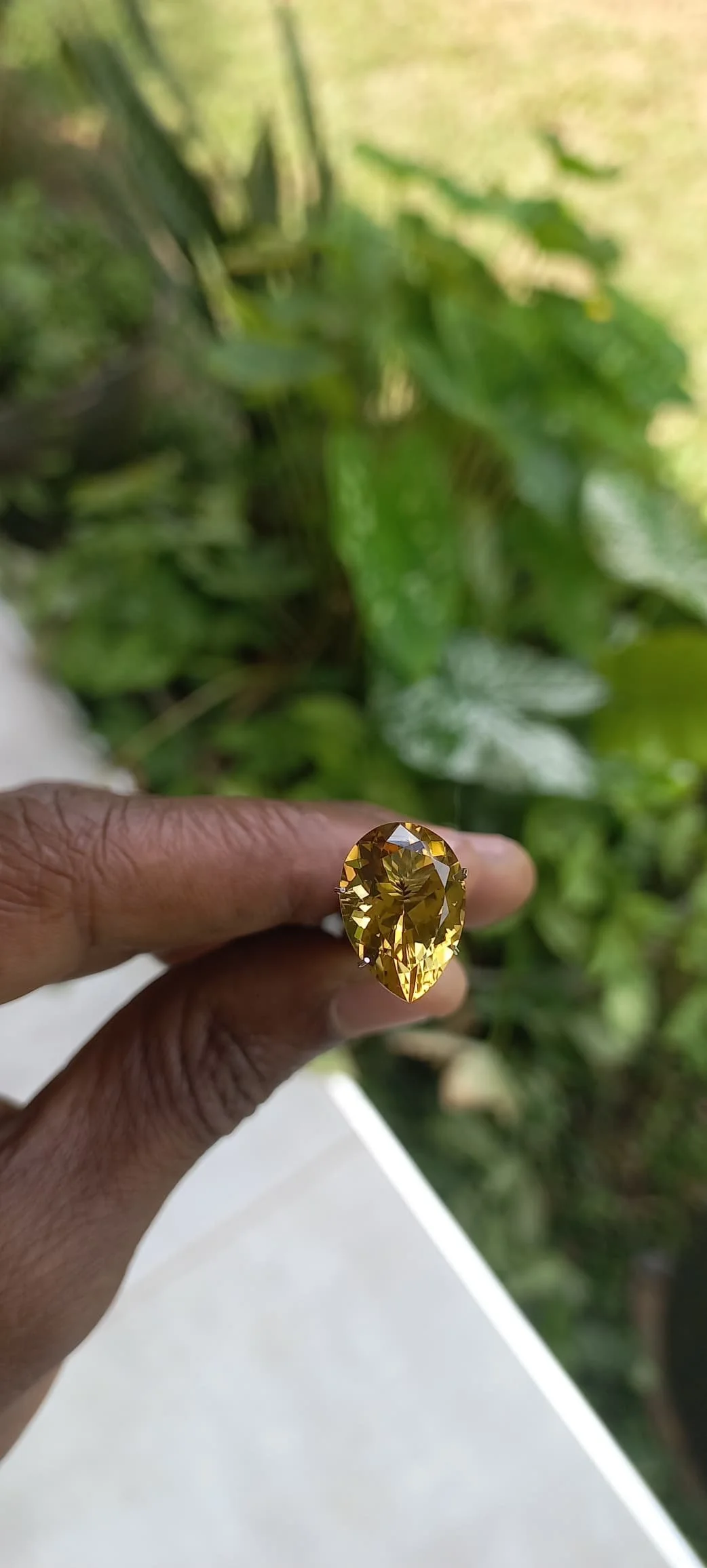
Zambian citrine cut by Rudolf Kangwa

